In golf, proper body movement is essential to performing the age-old motion we call the golf swing. Understanding how the body moves is the foundation of how I teach, which is why every one of my clients starts with a full body assessment. As their coach, understanding how their body moves helps me identify the limitations that are detrimental to their golf swing. Whether those limitations come from lack of flexibility, range of motion, strength, balance, or compensations from previous injuries, the assessment lets me build a program around the individual's needs.
For example, there might be strength imbalances in the hips, tightness in the shoulders, or restrictions in the back. Issues like these will often hinder a student from moving correctly throughout the golf swing. In this article we'll go through a common fault I see in the hips due to lack of mobility and strength, and show you an exercise that gives my students the range of motion they need to improve their overall game.
The fault: no separation between upper and lower body
What I often see during a backswing is the golfer's inability to separate the lower body from the upper body. If I ask a student to show me a backswing with proper hip rotation, what they usually do is move their pelvis along with their upper body at the same time. This sets them up in a very weak position at the top of their swing. Although it might feel powerful to turn everything and get behind the ball, in reality they're making it harder on themselves to swing the club on plane — and they're more prone to injury.
What's causing it?
More often than not, it's due to poor hip mobility. The hips move the legs in all directions while stabilizing them at the same time. Some golfers have strength in certain areas of the hip, but few enjoy a full range of motion — and that negatively impacts the swing. If you can't involve your lower body properly, the swing becomes upper-body dominant, affecting your backswing, downswing, and follow-through.
The fix: Mountain Climbers
One of the things I do to fix these issues is get the hips to be both strong and mobile. A simple exercise I incorporate into my students' training is the Mountain Climber. It's a great way to create more range of motion in the hips while reinforcing core stability.
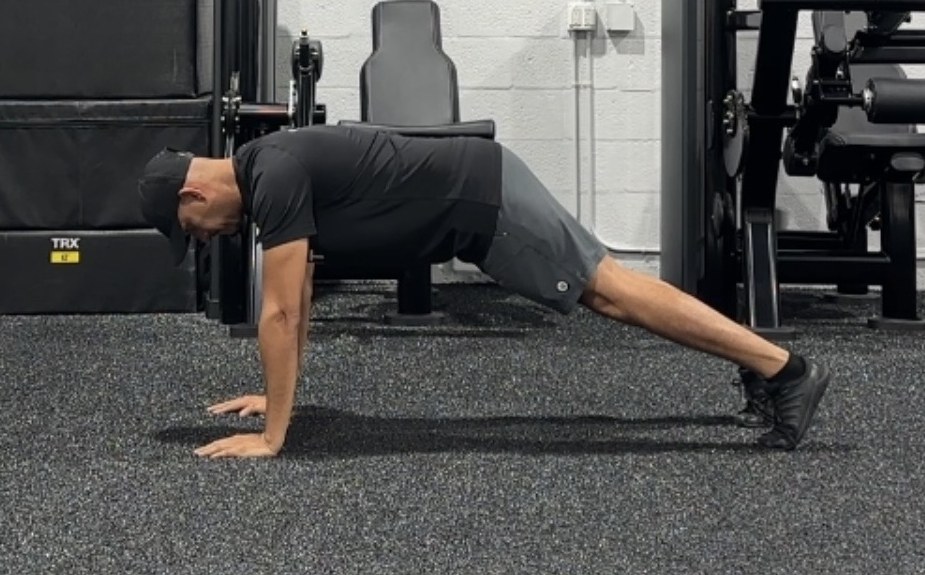
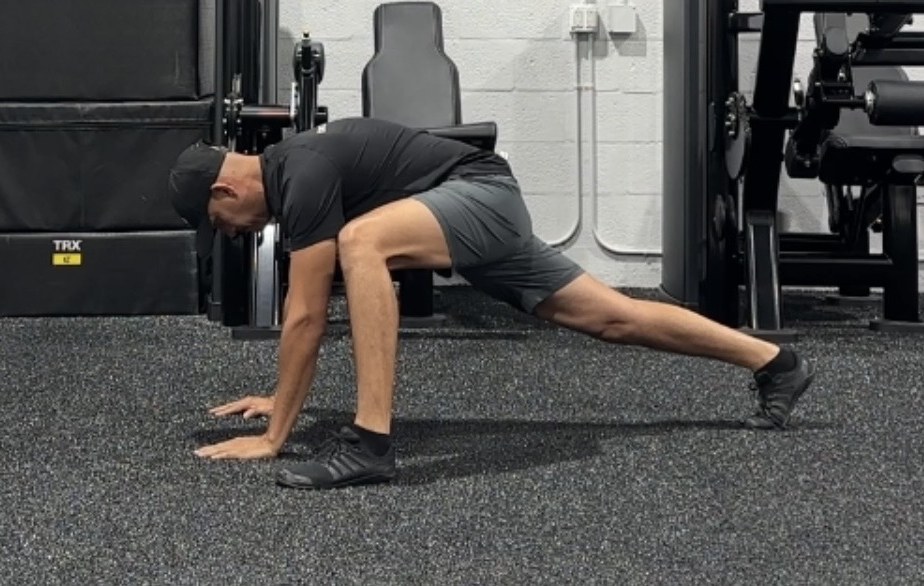
Mountain climbers create full-body tension that lets you "dial into" the ground and hit nearly every muscle, while forcing you to use your hip flexors — which are often weak and mistaken as tight. Strengthening the hip flexors alongside the other core muscles allows the nervous system to recognize the hip joint as stronger, which in turn allows more movement in that area.
How to perform it
- Grab a mat and set up in a traditional plank position.
- Slowly drive your right knee toward your right elbow, creating as much range of motion as possible in the hip flexor.
- Return to the plank, then repeat the same movement with the left leg.
- Keep the hips from bouncing up and down — the slower you perform it, the better the stretch and engagement.
- Perform 10 repetitions on each side.
A bonus to this exercise is that you'll also engage your core, arms, and shoulders.
The bigger picture
Identifying weaknesses like poor hip mobility and working to correct them will benefit your game far more than working around a chaotic move with little control. Addressing these issues will not only let you play the game for longer, it will help you live a more comfortable lifestyle. As a golf and sports performance coach, it's not just my responsibility to improve your game — it's to improve your overall health. This exercise will help you do both.
Till next time, hit them well.
Join the Newsletter
New golf swing & fitness tips, every week.
We won't send you spam. Unsubscribe at any time.