While there is no feeling like a well-struck golf ball, many players spend 18 holes hitting poorly struck shots, save one or two, and then lament over every one of those agonizing performances after their round. Although there are a number of factors that may cause a golf swing to repeatedly produce poor shots, one of the most common causes rests in the concept of the backswing.
A lot of over-informed people will say, "You don't hit the ball with your backswing" and "It's really all about the downswing or the impact area." What I will say to that is this: when you are dealing with an advanced or accomplished player, certain patterns are already inherent to their golf swing. But for most of the golfing population, those patterns have yet to be established. Unless you are athletically gifted and have all the time in the world to practice, you won't get away with certain swing flaws and will always struggle to make consistent, solid contact with the golf ball. In my opinion, the biggest factor to understand is the way our upper and lower body should move and work together as we take the club to the top of the swing.
Loading into the backswing
We are told to load into the backswing so that our transition can be fluid back to the ball. However, most golfers get themselves into trouble right off the bat. They will either slide their lower body too much or sway their upper body away from the ball, causing them to not only find themselves in a very weak and unstable position, but also get their club off plane at the top of their swing.
The drill: Single Leg Balance with Rotation
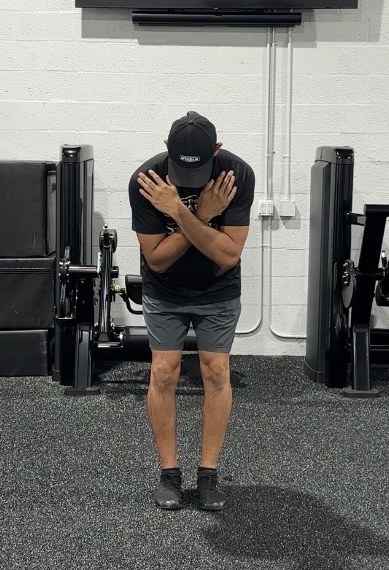
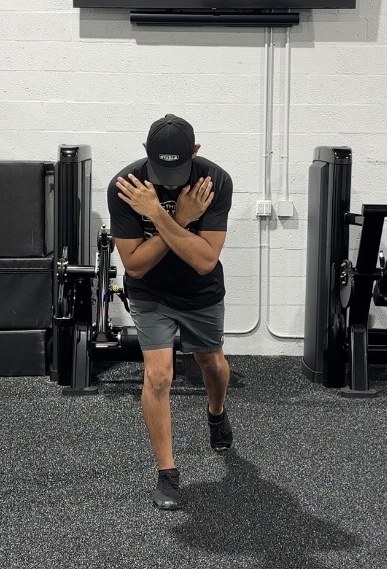
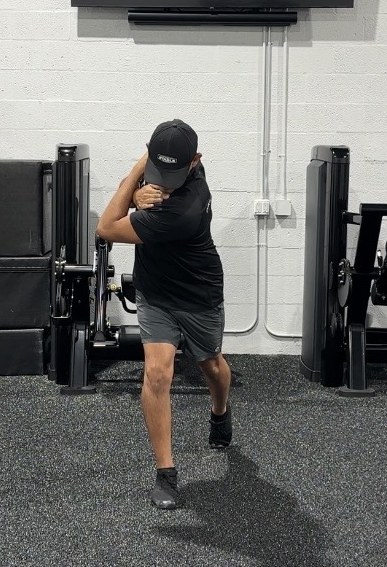
A very simple and effective exercise you can work on that will give you the feeling and sense of a properly loaded move and position into the top of the swing — without even using a club — is called "Single Leg Balance with Rotation." Very simply, take your 7-iron posture as if you were standing over the ball, assume a narrow stance as if you were chipping, and place your arms across your chest. From this position, pull back your left foot (right foot if you play left-handed) and make a shoulder turn without losing your balance.
What to watch
Things to pay attention to: keep your trail knee flexed and maintain your spine angle as you rotate into your backswing. While this is a fundamental move, it brings awareness to hip rotation, core stability, and thoracic rotation. To take this to the next level, simply lift your target-side foot. Completing 10-12 slow repetitions, this is a very productive drill you can do just about anywhere.
It will help you train your lower body to maintain its balance and stability as your upper body rotates properly, safely, and sequentially. It also gives you a sensation and feeling of a proper backswing, which then makes it so much easier to accomplish it with a club in hand.
When to seek help
Golfers often struggle feeling a proper load into the backswing, especially if they don't have a clear idea on how to achieve it. Sometimes the student is not physically able to achieve a certain movement. If this is the case, instead of putting a band-aid on the issue, I highly recommend finding a biomechanics specialist and addressing the issue alongside your swing coach. Not only will your swing improve at a much faster rate, but you will also eliminate the risk of future injuries due to compensations in the swing.
Till next time, hit them well.
Join the Newsletter
New golf swing & fitness tips, every week.
We won't send you spam. Unsubscribe at any time.